Choose a cap by how the crown sits
Compare cap profiles for hair, glasses and the fit you want before keeping one on the Kakobuy Spreadsheet shortlist.
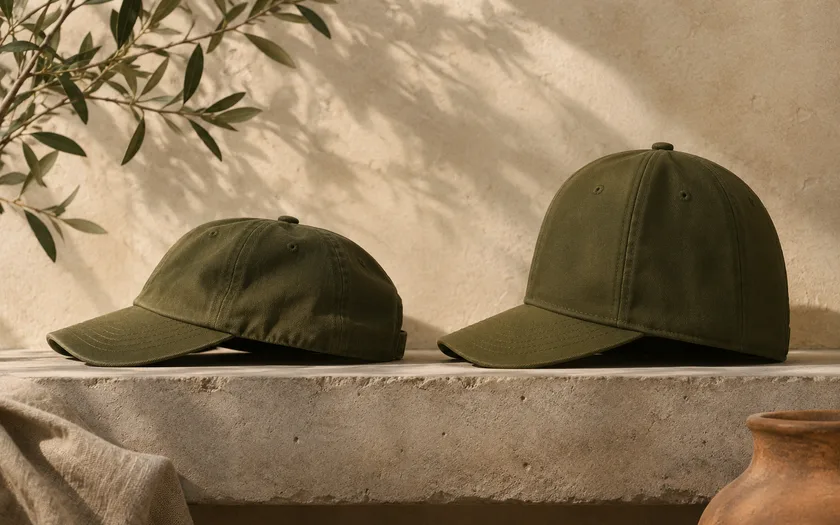
Decide how you will wear it on a normal day
Put on any cap you own with your hair and glasses as you usually wear them. Look at how low the front edge sits above the eyebrows, whether the sides touch your ears and how close the brim comes to your glasses. Take a side photo looking straight ahead. You now have a reference for a change you can describe, such as “a little more room above the ears.”
Read the side view and check the front panel
An eye-level side view shows if the front rises upright or slopes back. A low crown with a soft front tends to follow the shape beneath it, while a structured front can hold visible space. Check for a close-up of the interior front panel or ask whether it holds its shape when the cap is empty. Compare with another cap photographed from the side, since a view from above hides some of the depth.
Try the brim with the things you wear
Test your reference cap with your usual eyewear by looking forward and slightly down. The brim angle and how far the cap sits forward can influence whether it touches the frames. If you often wear over-ear headphones, try twenty minutes with them and note where the cap seam or adjustment strap presses. A use case like this can tell you more than a studio photo of the cap by itself.
Write a practical threshold
Use a note such as “soft front, sits above ears, must clear round frames.” For a taller crown, decide if extra space at the top is a look you want, and ask for a photo of the cap on a head or form if possible. Keep a promising listing when the available shape supports your main use. Wait when all you have is a front-facing image and the profile is the deciding factor.