Why trouser rise matters when you sit down
Compare front and back rise with a pair you comfortably sit in before choosing trousers from a Kakobuy list.
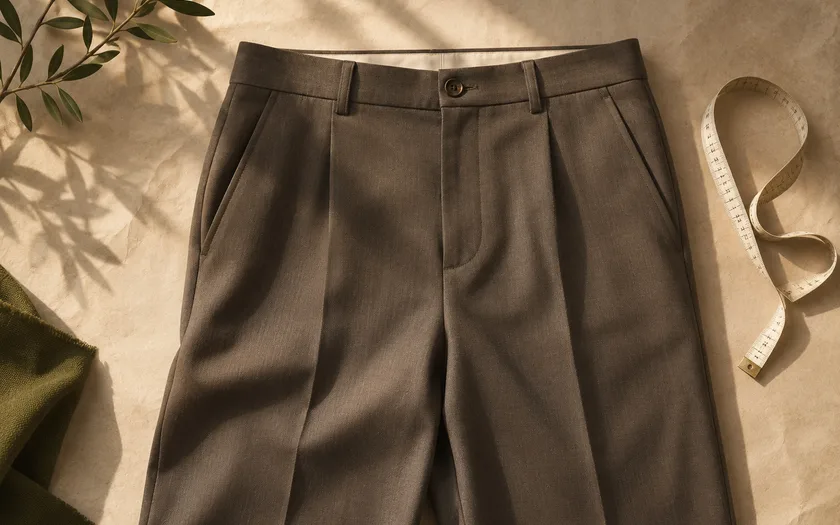
Use a pair you can sit in for an hour
Choose trousers that feel comfortable at a desk, on a bus or wherever you sit most often. Fasten them and mark where the waistband lands in front and behind when standing. Sit normally and record where the waistband moves and whether the crotch seam pulls. If one pair feels better than another with the same waist size, those observations give you a place to look.
Measure front and back rise on the seams
On a flat pair, find the point where the leg and crotch seams meet. Measure along the front seam from that point to the top edge of the waistband, then turn the trousers and measure the back the same way. Confirm how a listing was measured before comparing. If one number follows the curve while another comes from a straight vertical line, the difference can reflect technique.
Connect the numbers to your daily routine
Suppose a comfortable pair measures 29 cm in front and 39 cm at the back using the same method. You find a candidate at 28 cm in front and 35 cm at the back with similar fabric. The four-centimetre difference at the back is a reason to check where the waistband might sit and how much room there is through the seat. Compare a side view and the hip width before drawing a conclusion.
Record a use case as well as a dimension
Give the row a job such as “train commute and desk work” or “occasional standing events.” Add your reference pair and specify what would make sitting uncomfortable. A short back rise may work with a stretch fabric or a placement that you already like. For a rigid fabric and a long seated commute, leave the candidate pending if the back measure and seat shape remain unknown.