Inspect the parts you touch on a secondhand accessory
Use close-ups of clasps, zipper pulls and attachment points to decide whether a used accessory suits daily use.
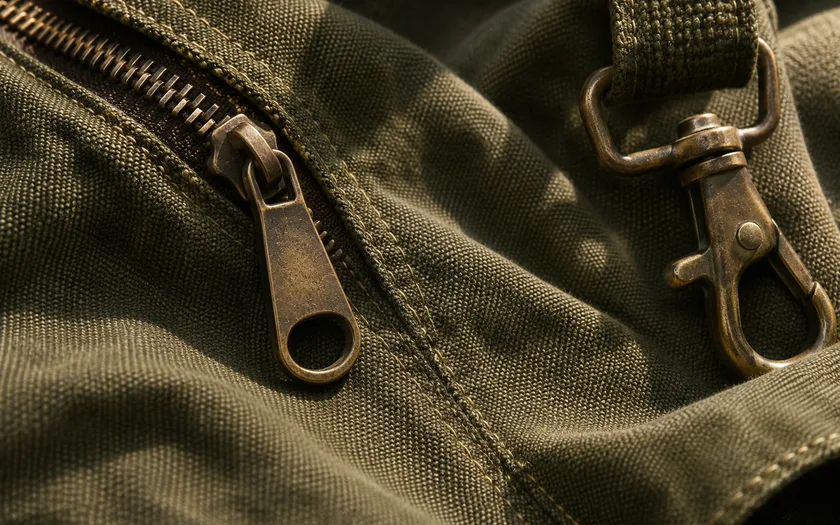
Start at the main point of use
Pick the part you will operate most. On a pouch you open repeatedly, look at the pull, the base of the zipper and its surrounding fabric. On a small key clip, prioritize the gate and its hinge. A decorative plaque tells you little about how those parts work. Ask for an open and a closed photo of the actual item if the listing shows only a styled shot.
Decide which visible details affect the job
A slightly polished edge can be acceptable on a clasp that still meets cleanly. A visible gap with the gate closed or fraying around a zipper stop calls for a closer check. For a magnetic closure, ask whether the two faces line up when the bag is resting normally. Photos describe shape and visible wear. A short opening and closing video, if available, helps show whether there is a catch or hesitation.
Think about the material it touches
Trace where the hardware will land against your things. A rough edge by the zipper can catch a scarf when both are stored in the same bag. A ring with worn coating on the underside may be fine on a key clip but less appealing if it rests against a pale sleeve. Ask where any roughness is, and test a similar shape with clothes you already wear to decide whether that position matters.
Make a clear record for later comparison
Save a location, an observation and a functional question in your Kakobuy list. For example, “zipper bottom, thread frays beside stop, does it catch on opening?” Choose the condition you are willing to live with and check whether the part could be replaced locally if it fails. Pause if the essential closure is always hidden or shown shut.