How to judge the opacity of a white T-shirt
Use repeatable photos and a shirt you own to test a white tee on your Kakobuy list for the way you will wear it.
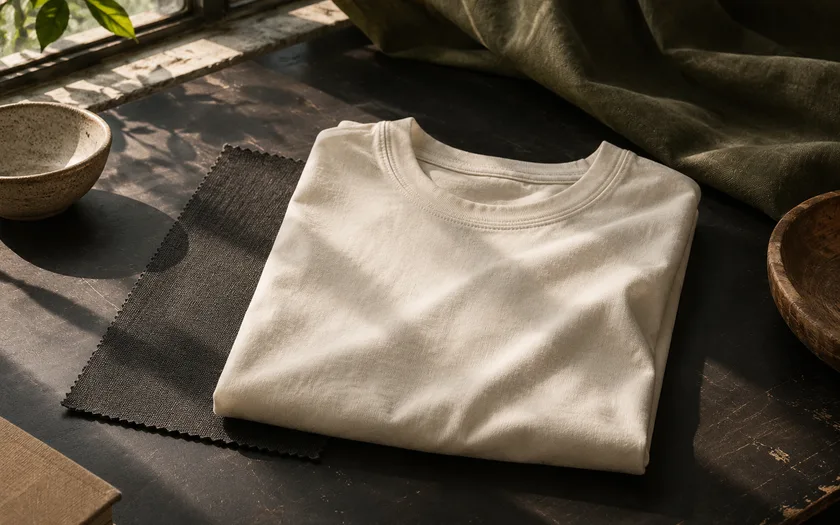
Set the standard with a shirt you own
Choose a white tee that feels right for the intended outfit. Put a dark fabric underneath a single front layer and take a phone photo in indirect daylight. Notice whether you can see the rectangle’s edge, a seam underneath, or only a faint shadow. Write down what you would accept for wearing the shirt by itself and what works as a layer under an overshirt.
Request comparable evidence from the listing
Look for a photo that shows one unstretched layer with a contrasting object behind it. A folded shirt is several layers thick, so ask for a flat view with the back of the shirt held away. If there is a fabric weight in the description, save it alongside the photo. Fibre, yarn, knit structure and fit all affect how a white fabric looks on the body.
Allow for how it will fit and move
The fabric spreads across the chest, shoulders and elbows as you move. Compare the shirt with a known tee by reaching forward and checking whether the contrast changes where the fabric is under tension. If you want a slim white base layer, the worn appearance matters to the decision. For an open overshirt outfit where the front is visible, check the area around any chest print and the seams that could show through.
Make a useful note in the spreadsheet
Use a short, bounded observation such as “dark card edge visible through relaxed front in daylight.” Add the outfit you planned for it. If a listing only shows the garment on a white background, leave opacity open until you have a better view, or choose a candidate with clearer evidence. A photo at arrival can help you remember which level of contrast worked for the next search.